


Healthy College Eating Habits for Easy Dorm Meals and Better Energy
College can turn eating into a series of rushed decisions. Breakfast gets skipped before an 8 a.m. class. Lunch becomes whatever fits between labs. Dinner may depend on a microwave, a mini fridge, and how tired the day felt.
The good news is that healthy eating in college does not require a full kitchen, expensive ingredients, or perfect discipline. It comes down to a few repeatable habits: build balanced meals, keep easy staples nearby, drink enough water, and make snacks work for you instead of against you.
This guide is informational only and is not medical advice. If you have food allergies, a medical condition, or specific nutrition needs, a registered dietitian or healthcare professional can help you personalize your plan.
Start with meals that keep energy steady
A good college meal does not need to look fancy. It should help you stay full, think clearly, and avoid the crash that comes after eating only sugary or salty foods.
The simplest way to build a meal is to include three parts:
Protein
Eggs, Greek yogurt, tuna, beans, lentils, tofu, chicken, turkey, cottage cheese, or hummus
High-fiber carbohydrate
Oatmeal, whole grain bread, rice, tortillas, potatoes, fruit, or whole grain pasta
Color or crunch
Fresh fruit, frozen vegetables, salad kits, baby carrots, tomatoes, spinach, peppers, or salsa
This formula works for breakfast, lunch, dinner, and late-night meals. It also makes dining hall choices easier. Instead of searching for the “perfect” option, build a plate with protein, a grain or starch, and produce.
For example:
Meal | Easy balanced option |
Breakfast | Oatmeal with peanut butter and banana |
Lunch | Turkey or hummus wrap with carrots and fruit |
Dinner | Rice bowl with beans, frozen vegetables, and salsa |
Late meal | Greek yogurt with granola and berries |
Balanced meals matter because college schedules can be demanding. Long gaps between meals often lead to low energy, trouble focusing, and stronger cravings later. Eating something steady before class, study sessions, or a long shift can make the day feel less chaotic.
Make breakfast low effort
Breakfast is often the first habit to disappear in college. It can feel easier to grab coffee and go, especially after a late night. The problem is that skipping food in the morning can leave you running on caffeine alone.
Breakfast does not have to be large. It just needs to be easy enough to repeat.
Good dorm-friendly breakfast ideas include:
Instant oatmeal with nuts, fruit, or peanut butter
Greek yogurt with granola
Whole grain toast with avocado, eggs, or nut butter
Cottage cheese with fruit
A tortilla with scrambled eggs and spinach
A smoothie made with yogurt, milk, fruit, and peanut butter
If mornings feel rushed, keep a few grab-and-go choices ready. A banana and yogurt is better than nothing. A peanut butter sandwich can work as breakfast. Leftover rice with an egg can be a solid morning meal if that sounds good.
The goal is not to follow a strict breakfast rule. The goal is to give your body something useful before the day starts asking for energy.
Stock a dorm pantry that prevents panic eating
Many poor food choices happen when there is no plan and no backup. That is when vending machines, delivery apps, and random snacks start to become the default.
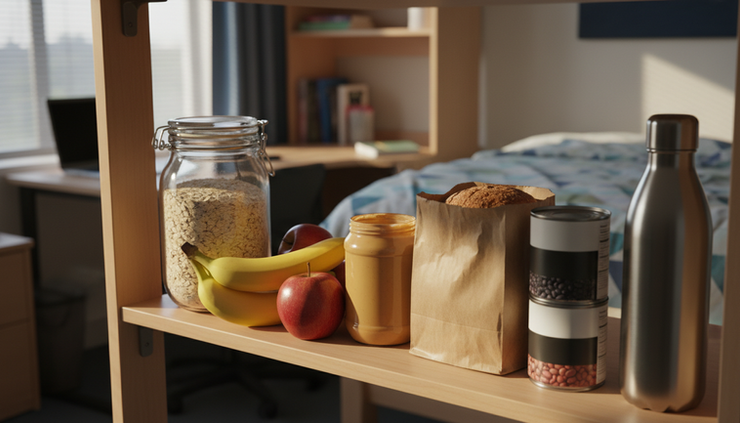
A small dorm pantry can change that. You do not need a lot of space. A shelf, storage bin, mini fridge, and microwave can cover plenty of meals.
Shelf-stable staples to keep on hand
Oats
Whole grain bread, tortillas, or pita
Peanut butter or almond butter
Canned tuna, salmon, beans, or chickpeas
Microwave rice or grain cups
Soup with protein, such as lentil, bean, or chicken soup
Trail mix with nuts and dried fruit
Whole grain crackers
Shelf-stable milk or protein shakes, if you like them
Mini fridge staples that earn their space
Eggs, if you have a way to cook them safely
Greek yogurt
Cheese sticks
Hummus
Baby carrots
Salad kits
Washed fruit
Pre-cooked chicken or tofu
Salsa
Frozen vegetables, if you have freezer space
A stocked dorm room lowers the chance that hunger turns into an expensive food decision. It also helps during bad weather, packed exam weeks, or evenings when the dining hall closes before you can get there.

Learn a few easy dorm meals
Dorm meals work best when they use simple parts you can mix and repeat. You do not need a new recipe every night. You need a few meals that take little thought.
Microwave rice bowl
Start with a microwave rice cup or leftover rice. Add canned beans, frozen vegetables, salsa, and cheese or avocado if you have it.
This meal gives you carbs, protein, fiber, and flavor with almost no prep. It also works with chicken, tofu, or tuna.
Loaded oatmeal
Oatmeal is not just plain cereal in a bowl. Add peanut butter, banana, cinnamon, nuts, or yogurt. For a more filling version, use milk instead of water.
This is one of the easiest dorm meals because it is cheap, fast, and shelf-stable.
Hummus wrap
Spread hummus on a tortilla. Add spinach, carrots, cucumbers, chicken, turkey, tofu, or chickpeas. Roll it up and pair it with fruit.
This works well when you do not want to cook.
Microwave baked potato
Microwave a potato until soft. Add cottage cheese, beans, salsa, broccoli, or shredded cheese.
A potato is filling, affordable, and easy to dress up with whatever you already have.
Tuna or chickpea cracker plate
Mix tuna or mashed chickpeas with a little Greek yogurt, mayo, mustard, or seasoning. Eat with whole grain crackers and raw vegetables.
This meal is helpful during long study nights because it takes only a few minutes.
Make dining hall choices easier
Dining halls can be helpful, but they can also feel overwhelming. A simple plan makes them easier to use.
Start by scanning before filling your plate. Look for a protein, a filling carb, and a fruit or vegetable. If the meal looks light, add another side. If it looks heavy, add produce or water to balance it out.
Good dining hall combinations include:
Eggs, toast, fruit, and yogurt
Chicken, rice, vegetables, and salad
Bean chili with a baked potato
Sandwich with soup and fruit
Pasta with meat sauce or beans plus vegetables
Stir-fry with rice and tofu, chicken, or shrimp
Pizza, burgers, fries, and dessert can fit sometimes. The key is making them part of a pattern rather than the whole pattern. If lunch is pizza, pair it with a salad or fruit. If dinner is a burger, drink water and add vegetables where you can.
Healthy eating becomes much easier when every choice does not feel like a test.

Handle snacks without letting snacks handle the day
Snacks are not the enemy. Random snacking all day can become a problem when it replaces meals or leaves you feeling sluggish.
A helpful snack has at least one of these:
Protein
Fiber
Healthy fat
Produce
That means an apple alone is fine, but an apple with peanut butter may keep you full longer. Crackers are fine, but crackers with hummus or cheese can be more satisfying.
Smart snack ideas for college include:
Greek yogurt
String cheese and fruit
Trail mix
Hummus and carrots
Peanut butter on whole grain toast
Hard-boiled eggs
Popcorn
Cottage cheese
Nuts and dried fruit
Whole grain cereal with milk
Try to avoid using snacks as your main meals every day. Chips, candy, pastries, and sugary drinks can be enjoyable, but they do not usually provide lasting energy. If snack foods are hard to stop once you start, keep smaller portions in the room or choose single-serve options.
Another helpful habit is to pause before snacking and ask one question: Am I hungry, tired, stressed, or bored?
If you are hungry, eat. If you are tired, a short rest may help more. If you are stressed, food may comfort you for a moment, but it may not solve the stress. This small pause can prevent automatic eating without turning food into a moral issue.
Drink water before energy crashes
Water is one of the most overlooked college nutrition habits. Dehydration can make you feel tired, headachy, or distracted. It can also make hunger feel stronger than it is.
You do not need a complicated hydration plan. Carry a reusable bottle and build water into daily routines:
Drink water when you wake up
Refill before each class block
Drink with meals
Keep water nearby while studying
Drink extra when exercising or spending time outside
Coffee, tea, and other drinks can be part of your day, but water should still show up often. Sugary drinks, sweet coffee drinks, and energy drinks can add a lot of sugar quickly. They may give a short lift, then leave you feeling more tired later.
A good rule is simple: if you are relying on caffeine to get through every basic task, check your sleep, meals, and water first.
Plan for late nights and busy weeks
College schedules rarely stay neat. Exams, club meetings, work shifts, practices, and social plans can all collide. Good nutrition habits need to survive those weeks.
The best approach is to prepare a few backup meals before you need them.
Keep these emergency options ready:
Microwave rice and canned beans
Frozen vegetables
Oatmeal and nut butter
Soup and whole grain toast
Yogurt and granola
Tuna packets and crackers
Protein bars with a short, recognizable ingredient list, if they fit your budget
During exam weeks, try not to let your meals disappear. Even a simple meal can help you stay steady. Eat before long study sessions. Bring water. Pack a snack so you do not end up studying for hours on only coffee.
If delivery is the only realistic option some nights, make it work better. Order something with protein and vegetables when possible. Save half for the next day if the portion is large. Add fruit, carrots, yogurt, or water from your room.
Eat well on a student budget
Healthy eating has a reputation for being expensive, but many useful foods are affordable. Oats, rice, beans, eggs, potatoes, frozen vegetables, bananas, peanut butter, canned tuna, lentils, and yogurt can stretch across many meals.
A few budget habits help:
Buy ingredients that work in more than one meal
Use frozen produce when fresh produce spoils too fast
Choose store brands when available
Split bulk items with roommates if storage is limited
Bring snacks from your room instead of buying them daily
Use the dining hall for fruit, salads, and protein when your meal plan allows it
Food waste drains a budget fast. If you often throw away fresh vegetables, buy smaller amounts or switch to frozen. If fruit goes bad, choose apples, oranges, or bananas in smaller batches.
A realistic food plan beats an ideal one that does not match your schedule, budget, or storage space.

Build habits that are flexible enough to last
Healthy college eating habits work best when they feel doable on an average Tuesday, not just during a perfect week.
Start with one or two small changes:
Eat breakfast three days this week
Carry water to class
Add protein to snacks
Keep two emergency meals in your room
Add fruit or vegetables to one meal per day
Choose a balanced dining hall plate most of the time
Once those feel normal, add another habit.
Food should support college life, not make it more stressful. Aim for steady energy, fewer skipped meals, and simple options you can repeat. A stocked shelf, a water bottle, and a few easy dorm meals can make a bigger difference than any complicated diet plan.
The best routine is the one you can keep when classes are hard, laundry is overdue, and dinner has to happen in ten minutes.
Learn How We Can Bridge Gaps In Student Wellness Care On Campuses: https://www.bhealthynwell.com/higher-education-telehealth


Comments