


Stay Well During the Holidays Evidence Based Tips for Healthy Eating Exercise and Stress Relief
The holidays can be joyful, full, messy, and tiring all at once. Between travel, family events, rich meals, disrupted sleep, shorter days, and year-end pressure, even healthy routines can slip.
Good holiday wellness does not require strict rules or a perfect schedule. It works best when it is simple, flexible, and grounded in evidence. Guidance from the CDC, NIH, the U.S. Preventive Services Task Force, and the Academy of Nutrition and Dietetics points to a steady theme: small daily choices protect health when life gets busy.
This guide brings those recommendations together into practical steps for eating well, staying active, managing stress, sleeping better, and keeping up with preventive care during the festive season.
This article is for general information only and is not a substitute for medical advice. For personal guidance, check with a qualified health professional.
Start with the basics that protect health
Holiday wellness often feels complicated because the season adds more choices, more food, more commitments, and more chances to get run down. The strongest health advice is usually the least dramatic.
The CDC continues to emphasize everyday prevention habits that lower the spread of respiratory and foodborne illness. NIH resources on healthy aging, stress, sleep, and nutrition also point to steady routines as a foundation for well-being. The USPSTF adds another layer by recommending evidence-based screenings and preventive services, such as blood pressure checks, depression screening, alcohol use screening, and age-appropriate cancer screenings.
That sounds broad, but it translates into a few practical priorities:
Protect sleep Keep a regular sleep window when possible, even if bedtime shifts during gatherings.
Move most days Aim for consistency over intensity.
Build balanced meals Include protein, fiber-rich carbohydrates, fruits or vegetables, and fluids.
Manage alcohol and stress Both can affect sleep, mood, blood pressure, and safety.
Reduce infection risk Stay current on recommended vaccines, wash hands, stay home when sick, and handle food safely.
Keep preventive care on the radar The holidays can be a useful reminder to schedule overdue appointments.
These steps are not about avoiding celebration. They help make celebration easier to enjoy.
Eat well without turning holiday meals into a project
Holiday eating often comes with two unhelpful extremes. One says to “start over in January.” The other treats every seasonal food as a problem. A healthier middle ground works better.
The Academy of Nutrition and Dietetics encourages balanced eating patterns that include a variety of foods. That means fruits, vegetables, whole grains, lean proteins, low-fat or fat-free dairy or fortified alternatives, and healthy fats can all have a place. Holiday favorites can fit too.
A useful goal is not “perfect eating.” It is steady nourishment with room for joy.
Use the plate method at festive meals
At a buffet, potluck, or family dinner, scan the options before filling your plate. Then build a meal that has structure.
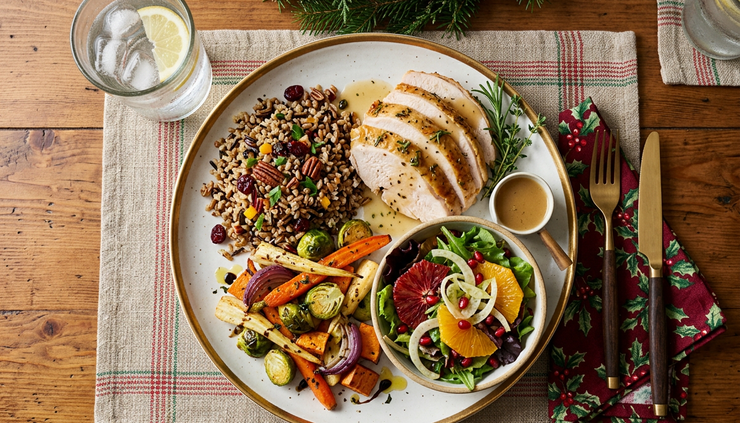
A simple plate can look like this:
Half the plate
One quarter
One quarter
On the side
Non-starchy vegetables or fruit, such as salad, roasted Brussels sprouts, green beans, squash, berries, or citrus
Protein, such as turkey, fish, beans, lentils, eggs, tofu, or lean meat
Grains or starches, such as potatoes, stuffing, rice, pasta, corn, or whole-grain bread
A favorite holiday food, sauce, or dessert that you truly enjoy
This approach supports blood sugar, fullness, digestion, and energy. It also makes meals feel less like restriction.
Do not arrive overly hungry
Skipping meals to “save up” for a holiday dinner can backfire. It may lead to overeating, low energy, irritability, or more alcohol than planned.
Try a small meal or snack before an event if dinner will be late. Good options include:
Greek yogurt with fruit
A boiled egg and whole-grain toast
Apple slices with peanut butter
Hummus with vegetables
A handful of nuts and a piece of fruit
Protein and fiber are a strong pairing because they help satisfaction last longer.
Choose drinks with intention
Sugary drinks and alcohol can add up quickly during the holidays. They can also affect sleep, mood, hydration, and next-day energy.
Practical choices include:
Alternate alcoholic drinks with water or sparkling water.
Eat before drinking alcohol.
Set a drink limit before the event starts.
Try festive nonalcoholic options, such as seltzer with cranberry and lime.
Keep water visible at home and during gatherings.
The CDC advises against drinking and driving, and the USPSTF recommends screening adults for unhealthy alcohol use in primary care settings. If cutting back feels hard, or alcohol is being used to cope with stress, bring it up with a clinician. That conversation is common, confidential, and worthwhile.
Practice food safety during gatherings
Holiday meals often sit out longer than usual. Food safety matters, especially when serving older adults, young children, pregnant people, or anyone with a weakened immune system.
CDC-aligned food safety habits include:
Wash hands before cooking and eating.
Keep raw meat, poultry, seafood, and eggs separate from ready-to-eat foods.
Cook foods to safe internal temperatures.
Refrigerate leftovers promptly.
Reheat leftovers thoroughly.
When in doubt, choose safety over saving one more serving.
Keep moving in ways that fit the season
Exercise is one of the most reliable tools for physical and mental health. It supports heart health, blood pressure, blood sugar, sleep, mood, balance, and energy. During the holidays, the key is to make movement easy enough to repeat.
CDC physical activity guidance for adults includes aiming for at least 150 minutes a week of moderate-intensity aerobic activity, plus muscle-strengthening activities on 2 or more days a week. Moderate intensity means the body is working, but conversation is still possible.
That can sound like a lot during a crowded week. Break it down.
Use the 10-minute rule
Short bouts count. A 10-minute walk after lunch, a 10-minute strength routine in the evening, and a 10-minute walk after dinner add up.
Ideas that work well in December:
Walk after a holiday meal.
Do bodyweight squats while coffee brews.
Stretch while watching a seasonal movie.
Take the stairs when it is safe.
Park farther away during errands.
Turn cleanup into movement by carrying, bending, and walking with purpose.
The best workout is the one that happens.
Add strength without equipment
Muscle-strengthening activity helps preserve function, balance, and metabolic health. It does not require a gym.
Try 1 to 3 rounds of:
Chair squats
Wall pushups
Step-ups on a sturdy step
Calf raises
Planks from the knees or against a counter
Carrying grocery bags evenly on both sides
Start gently if activity has been limited. Pain, dizziness, chest discomfort, or unusual shortness of breath are signs to stop and seek medical guidance.
Make movement social when possible
Physical activity can also support connection, which matters for mental health. Invite someone for a walk before dessert. Suggest a family stroll to see lights. Play outside with children if weather allows. Put on music and clean up together.
Movement does not need to compete with holiday traditions. It can become part of them.
Protect mental health with stress tools that actually fit real life
The holidays can bring warmth and connection. They can also bring grief, loneliness, financial strain, family tension, caregiving demands, and sensory overload. Feeling stressed during a festive season is not a personal failure.
NIH resources often emphasize practical stress management, including sleep, physical activity, relaxation practices, social support, and seeking help when symptoms persist. The USPSTF recommends depression screening in adults, including pregnant and postpartum people, when systems are in place for follow-up care. That matters because mood symptoms are health symptoms.
Name the pressure points early
Stress feels harder to manage when it stays vague. Take five minutes and write down the main sources.
Common holiday pressure points include:
Too many events
Travel logistics
Family conflict
Grief or missing someone
Money worries
Cooking responsibilities
Alcohol around recovery or health goals
Work deadlines
Disrupted routines
Once the stressor has a name, it is easier to make a plan.
Set a few kind boundaries
Boundaries do not need to be harsh. They can be simple and respectful.
Try phrases such as:
“We can come for dessert, but we cannot stay late.”
“I am keeping gifts simple this year.”
“I am not discussing that topic today.”
“I need a quiet break for a few minutes.”
“I can bring one dish, but I cannot host.”
A boundary is not a demand that everyone agree. It is a clear statement of what is workable.
Use quick calming practices
Stress management does not require a long meditation session. Small practices can reduce the body’s stress response.
Try one of these:
Breathe in for four counts and out for six counts for 2 minutes.
Step outside and notice five things you can see.
Unclench the jaw, drop the shoulders, and relax the hands.
Put one task on paper so it stops looping in your mind.
Take a brief walk before responding to a tense message.
These are not cures for serious anxiety or depression, but they can help create space between stress and reaction.
Watch for signs that support is needed
Holiday sadness may pass. Some symptoms deserve attention.
Reach out to a health professional, therapist, crisis line, or trusted support person if you notice:
Persistent sadness, hopelessness, or numbness
Loss of interest in usual activities
Major changes in sleep or appetite
Panic symptoms or overwhelming worry
Increased alcohol or drug use
Thoughts of self-harm
If there is immediate danger or thoughts of suicide, call or text 988 in the U.S. for the Suicide and Crisis Lifeline, or call 911 in an emergency.

Stay ahead of germs, sleep loss, and preventive care
Healthy eating and exercise matter, but holiday wellness also depends on protecting the immune system, reducing avoidable risks, and keeping up with care.
Wash hands and stay home when sick
The CDC recommends regular handwashing as one of the simplest ways to prevent the spread of germs. Wash with soap and water, especially before eating, after using the bathroom, after blowing your nose, and after handling raw foods. If soap and water are not available, use hand sanitizer with at least 60% alcohol.
If symptoms suggest a contagious illness, choose rest over attendance when possible. It can feel disappointing to miss an event, but staying home helps protect others.
Check recommended vaccines
Respiratory viruses often rise during colder months. Staying current with recommended vaccines, such as flu and COVID-19 vaccines, can reduce the risk of severe illness. Some adults may also be eligible for RSV vaccination based on age, pregnancy, or health status.
Because recommendations can vary by age and medical history, ask a clinician or pharmacist what is right for you.
Prioritize sleep even when schedules shift
Sleep affects appetite, mood, immune function, focus, and stress tolerance. Holiday schedules can throw it off quickly.
Try this:
Keep wake time fairly consistent.
Get morning light when possible.
Limit late caffeine.
Avoid heavy alcohol close to bedtime.
Create a short wind-down routine.
Keep naps brief if they make nighttime sleep harder.
If travel crosses time zones, adjust gradually when possible and get daylight exposure at the destination.
Use the season as a preventive care reminder
The USPSTF reviews evidence and recommends preventive services that can help detect health concerns early. The right services vary by age, sex assigned at birth, pregnancy status, health history, and risk factors.
Common topics to review with a primary care clinician include:
Blood pressure screening
Cholesterol and diabetes risk
Depression and anxiety symptoms
Alcohol and tobacco use
Cancer screenings based on age and risk
Fall prevention for older adults
Vaccines and medication updates
If the calendar is too full right now, make the appointment for January. Putting it on the schedule is still progress.

Make a simple holiday wellness plan
A plan works best when it is short enough to remember. Instead of tracking every habit, choose a few anchors for the week.
Here is a practical version:
Wellness anchor | Simple target |
Meals | Include protein and produce at most meals |
Movement | Walk or move for 10 minutes on busy days |
Sleep | Keep a steady wake time most days |
Stress | Take one quiet pause before saying yes |
Hydration | Drink water between festive drinks |
Prevention | Wash hands, stay home when sick, and update vaccines as advised |
If even that feels like too much, pick one anchor. One steady habit is better than five abandoned ones.
A helpful question to ask each morning is: What would help me feel a little better tonight?
The answer might be eating breakfast, taking a walk, wrapping fewer gifts, calling a friend, drinking water, leaving early, or going to bed on time.
Staying well during the holidays is not about strict control. It is about giving the body and mind enough support to enjoy the season with more energy and less strain. Start with one meal, one walk, one boundary, or one earlier bedtime. Small choices repeated through the season can make January feel less like recovery and more like a continuation of care.


Comments